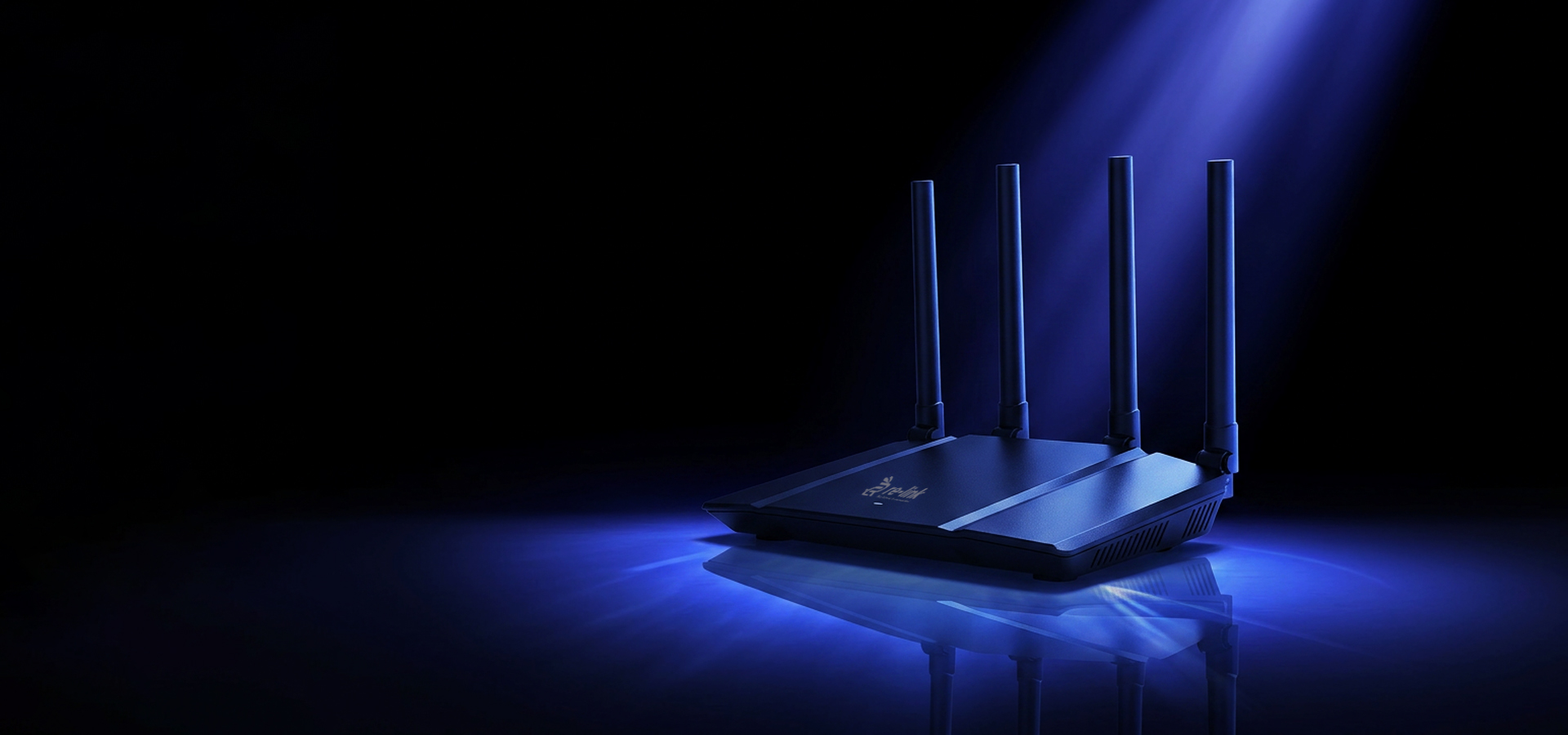
Wi-Fi 6: Everything You Need to Know
OFDMA, MU-MIMO, and BSS Coloring explained - the technology behind the fastest Wi-Fi standard before 6E.
Read Article
Wi-Fi 7 (IEEE 802.11be), branded as Wi-Fi 7 by the Wi-Fi Alliance, began certification in January 2024. While Wi-Fi 6 and 6E focused on efficiency and new spectrum access, Wi-Fi 7 pursues a different goal: dramatically higher peak throughput and deterministic low latency for demanding applications like augmented reality, cloud gaming, and industrial automation. Here's what matters in the new standard.
MLO is the defining feature of Wi-Fi 7 and the technology with the most immediate real-world impact. Previous Wi-Fi generations allowed devices to connect to only one band at a time - either 2.4 GHz, 5 GHz, or 6 GHz. Wi-Fi 7 with MLO allows a device to maintain simultaneous connections across multiple bands and transmit or receive on all of them at once.
The implications are significant:
Wi-Fi 7 doubles the maximum channel width from 160 MHz (Wi-Fi 6E) to 320 MHz in the 6 GHz band. Wider channels carry more data per transmission cycle. A single 320 MHz link can theoretically deliver over 5.8 Gbps to a single device - nearly 2.5x the throughput of the equivalent Wi-Fi 6E connection.
This is the kind of bandwidth that makes local storage streaming of 8K content realistic, and that opens wireless infrastructure as a credible alternative to Ethernet in commercial deployments where cable runs are expensive.
Wi-Fi 7 upgrades from Wi-Fi 6's 1024-QAM modulation to 4096-QAM (4K-QAM). QAM (Quadrature Amplitude Modulation) determines how many bits of data are encoded in each transmitted symbol. Moving to 4K-QAM encodes 12 bits per symbol instead of 10, delivering a 20% increase in spectral efficiency when signal quality is high enough to support it.
In practice, 4K-QAM requires excellent signal conditions - high signal strength and low interference. It delivers its gains primarily at close range (within 5-10 meters of the access point), but this is exactly where Wi-Fi 7's peak-performance use cases tend to operate.
Wi-Fi 7 extends MU-MIMO from Wi-Fi 6's 8 streams to 16 simultaneous spatial streams. Combined with MLO, a Wi-Fi 7 access point can serve 16 clients simultaneously across multiple bands and with multiple spatial streams per client. Dense office environments with dozens of high-bandwidth devices per access point will benefit most.
When using wide channels (160 or 320 MHz), it is common for portions of the channel to be occupied by other networks or interference sources. Wi-Fi 6E handled this by simply avoiding those channels. Wi-Fi 7 introduces punctured transmission, which allows the access point to skip over occupied sub-channels within a wide channel and continue transmitting on the unoccupied portions. A 320 MHz channel with 80 MHz of interference can still function as an effective 240 MHz channel rather than being abandoned entirely.
The honest answer: most homes and small offices do not need Wi-Fi 7 today. The bottleneck in the average network is the internet connection speed, not the wireless throughput. Wi-Fi 6 or 6E provides more than enough bandwidth for current internet speeds.
Wi-Fi 7 makes sense when:
Even if you are not buying Wi-Fi 7 hardware today, the standard should inform your decisions. Routers and access points purchased now should support MLO and 6 GHz to avoid being replaced prematurely as Wi-Fi 7 clients become widespread over the next 2-3 years. EasyMesh compatibility also ensures your infrastructure can grow incrementally without full replacement.
Re-Link's current Wi-Fi 6 product line, including the RE3006, is designed with firmware-forward architecture to support standard upgrades and EasyMesh expansion. We are actively developing Wi-Fi 7 products for release in the coming product cycle.
OFDMA, MU-MIMO, and BSS Coloring explained - the technology behind the fastest Wi-Fi standard before 6E.
Read Article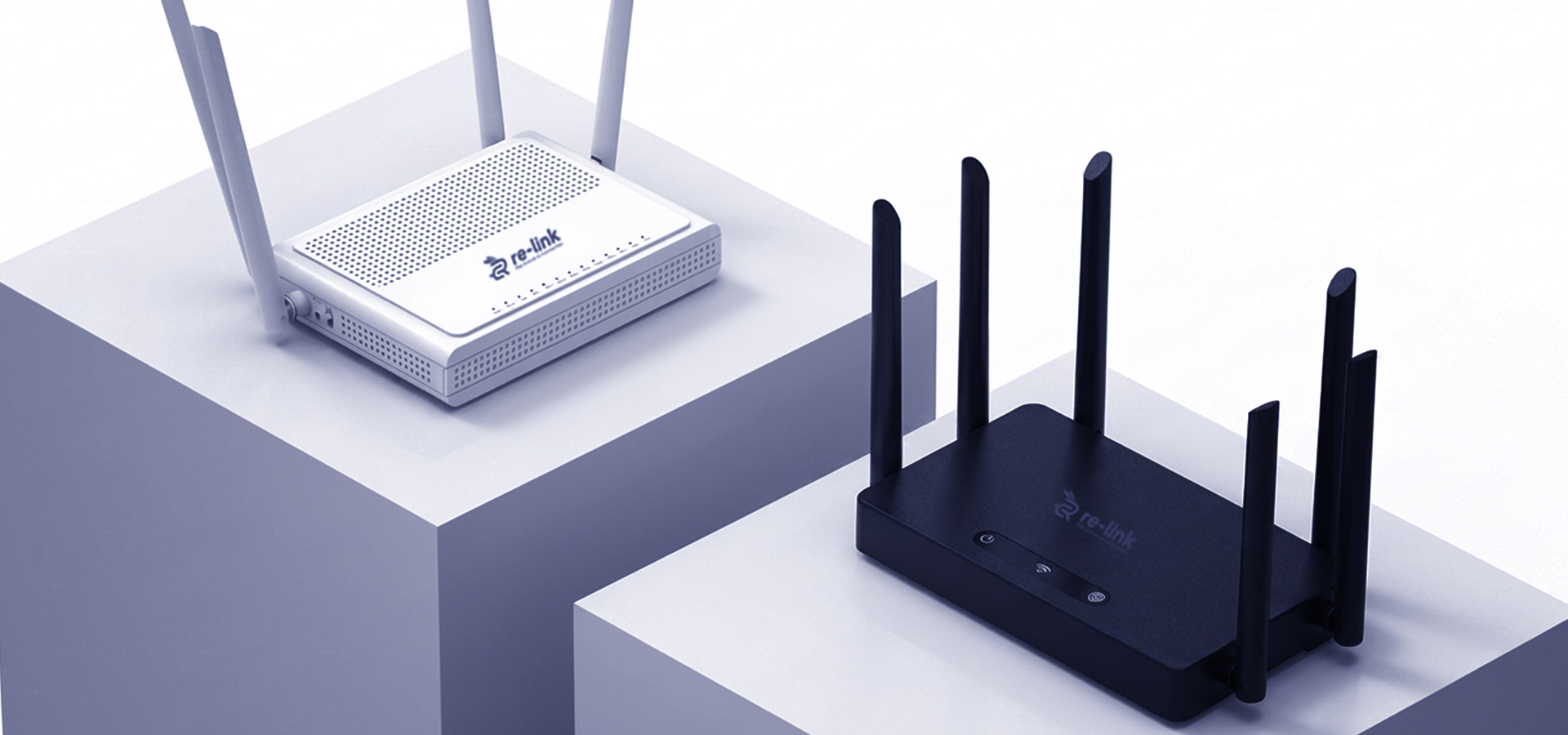
The 6 GHz extension opens a massive new spectrum band free from legacy interference.
Read Article
Speed tiers, range, antennas, and features - the complete router buying guide for homes and offices.
Read Article